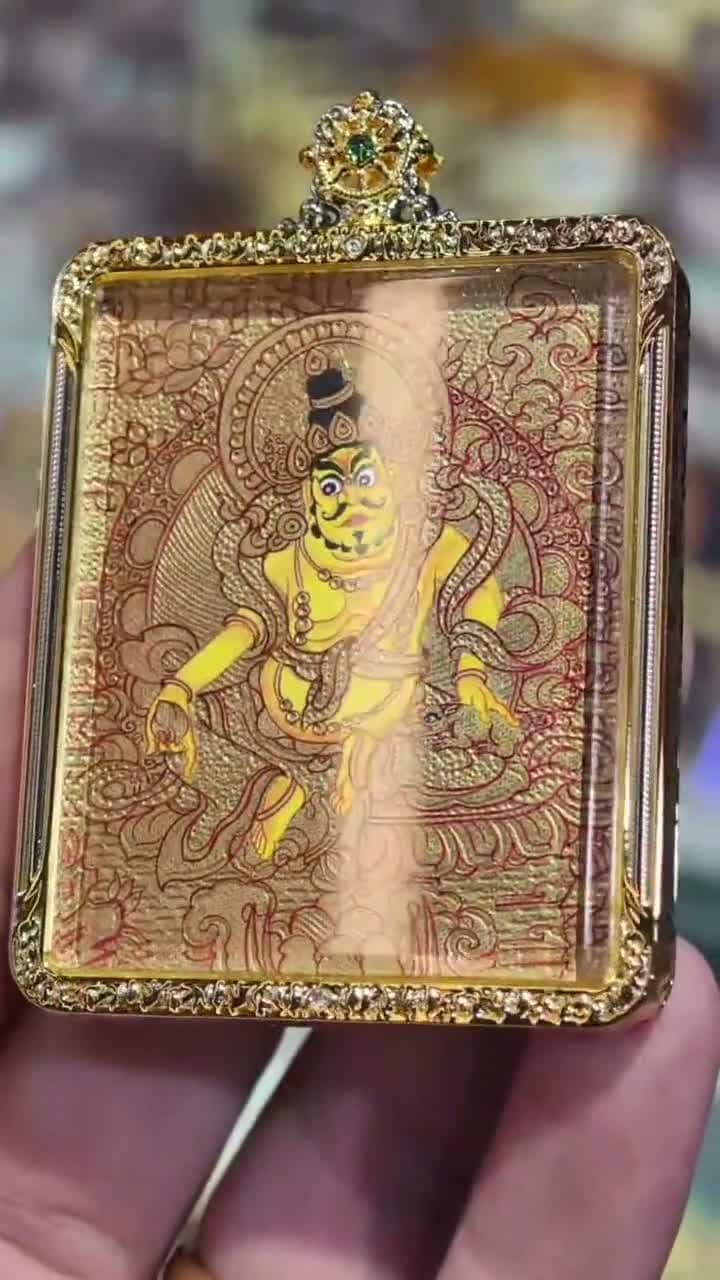
What it represents
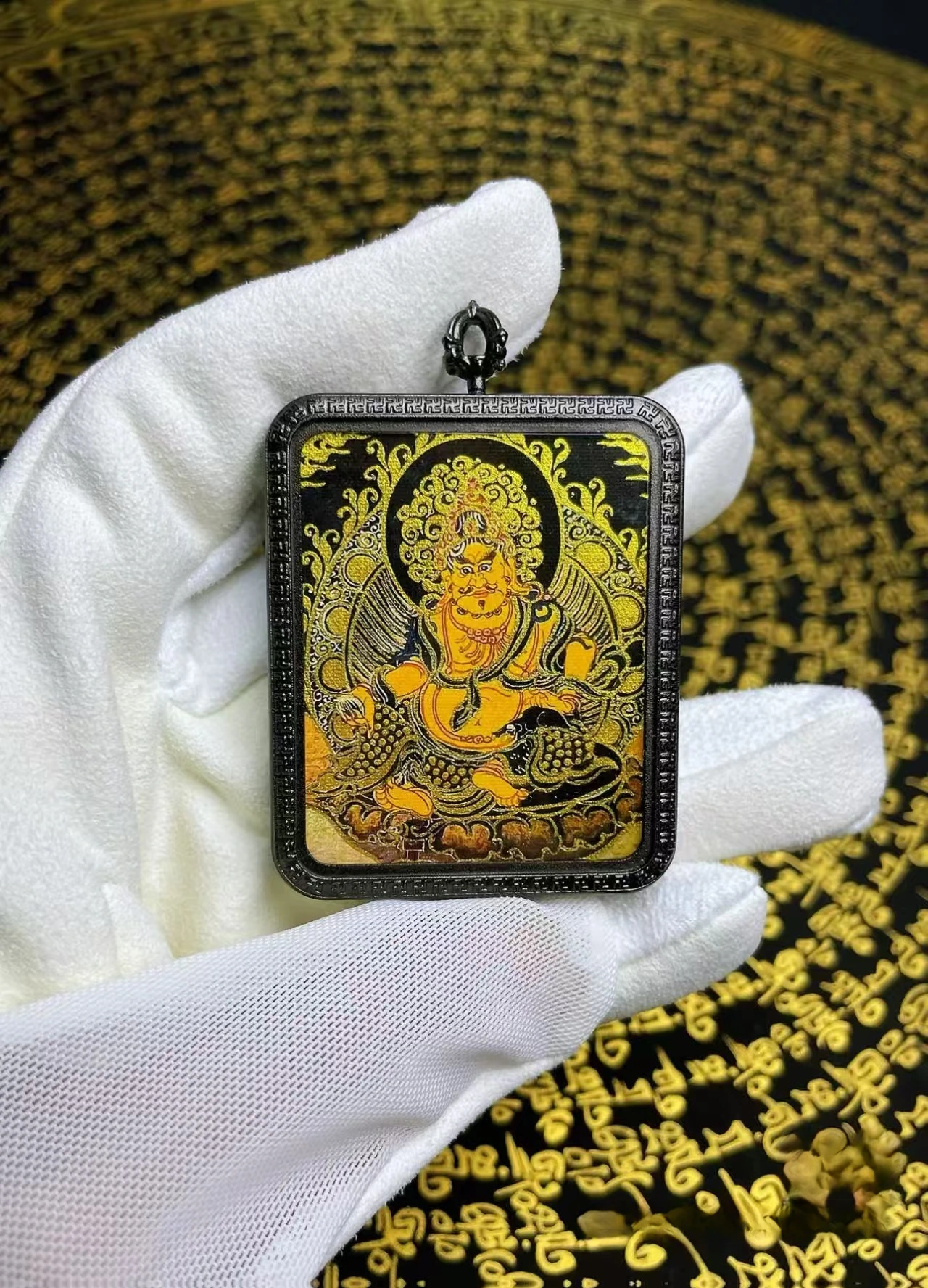
When the feeling of not-enough arrives, the eyes fix on what is still missing. In the tradition, Yellow Jambhala sets generosity and abundance in front of you. If that is the one you want, this is the piece. It is an anchor you can look down at. Wearing it does not bring wealth.
Name and tradition
Yellow Jambhala is often called Dzambhala in Tibetan. Wealth figures in this tradition come in five colors: yellow, white, black, red, and green. This piece is the yellow one, the form most often painted alone.
The name is tied to Kubera, a wealth figure in old Indian tradition. The Tibetan image follows that line. Vaishravana is also tied to wealth and is painted as a guardian king. This piece is not that figure. In the tradition, Yellow Jambhala is placed with the Ratnasambhava line. Vairocana is a different piece.
Details to look for
On this piece the body is yellow, and there is a crown. One hand reaches down from the seat. The other rests at the side. In the traditional picture, the lowered hand holds a fruit, and the hand at the side holds a mongoose with jewels at its mouth. This piece is drawn in fine line. The mongoose is read by setting it next to that tradition. It is not a gold ingot.
In some traditional pictures, the lowered foot rests on a conch. On this piece the foot reaching below the seat is clear. A conch is not clear in the line.
Before choosing a piece
This reading introduces the subject and the image. Check each product page for its own price, stock, dimensions, frame, pigments, and shipping details. Pieces depicting the same subject may differ in all of these details.
Shipping & returns ↗